
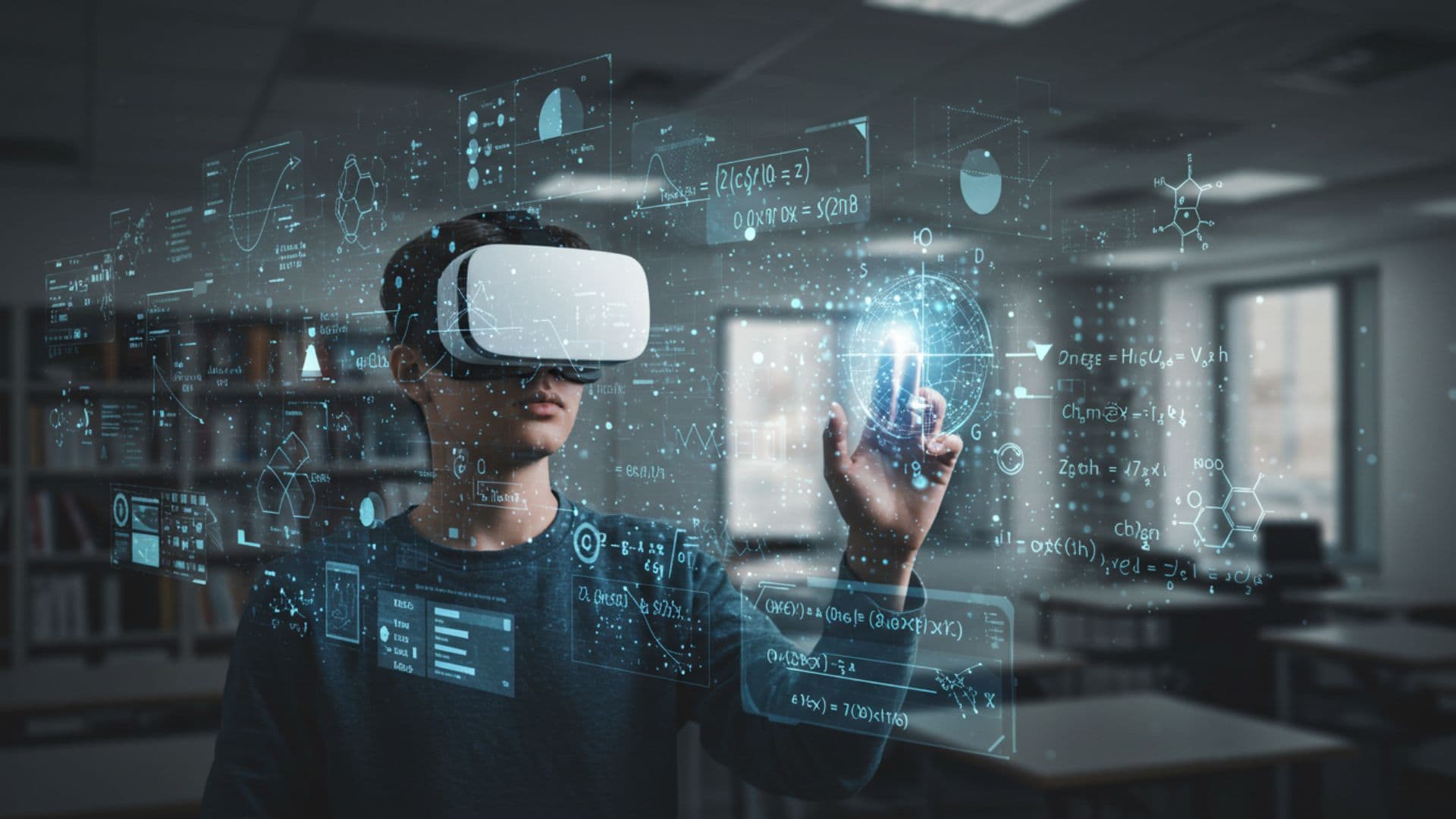
Learning in Virtual Reality: Revolutionizing Education and Skill Development
Embracing the Future of Education with Virtual Reality As technology continues to advance, the landscape of education and skill development is...
Embracing the Future of Education with Virtual Reality
As technology continues to advance, the landscape of education and skill development is undergoing a transformative shift. Virtual Reality (VR) has emerged as a powerful tool, offering immersive and interactive learning experiences that transcend traditional classroom boundaries. By 2025, VR is set to play a pivotal role in how we acquire knowledge, develop skills, and engage with educational content. This blog explores the various dimensions of learning in Virtual Reality, its current applications, and insightful predictions on how VR will evolve to enhance education and training.
Immersive Learning Experiences
Definition and Current Applications
Virtual Reality creates fully immersive environments where learners can interact with digital simulations that mimic real-world scenarios. This level of immersion enhances the learning experience by providing a sense of presence and engagement that traditional methods cannot match. Currently, VR is used in various educational settings, including:
Predictions for 2025: Enhanced Realism and Interactivity
By 2025, VR technology is expected to achieve significant advancements in realism and interactivity, making virtual learning environments even more lifelike and engaging. Improvements in graphics, motion tracking, and haptic feedback will create more convincing simulations, allowing learners to interact with virtual objects and environments in ways that closely resemble real-life interactions.

Virtual Classrooms and Remote Learning
Expanding Access to Education
Virtual Reality has the potential to democratize education by making high-quality learning experiences accessible to students regardless of their geographical location. Virtual classrooms eliminate the need for physical presence, enabling remote learning on a global scale.
Enhancing Remote Education
In the wake of the COVID-19 pandemic, remote learning has become more prevalent. VR takes remote education a step further by creating interactive and engaging virtual environments that replicate the dynamics of in-person classrooms.
Practical Skills Training
Simulated Training Environments
VR is particularly effective for training in professions that require hands-on experience and precision. Simulated training environments allow learners to practice and refine their skills in a controlled and safe setting.
Reducing Training Costs and Risks
By utilizing VR for practical skills training, organizations can significantly reduce the costs associated with traditional training methods, such as equipment, facilities, and instructor fees. Additionally, VR eliminates the risks associated with training in hazardous environments, ensuring the safety of learners.

Technological Advancements Supporting VR Learning
AI and Machine Learning Integration
The integration of Artificial Intelligence (AI) and Machine Learning (ML) with VR enhances the adaptability and intelligence of virtual learning environments. AI-driven tutors and personalized learning experiences cater to individual learner needs, optimizing the educational process.
Improved Hardware and Software
Advancements in VR hardware and software continue to enhance the quality and accessibility of virtual learning experiences. Improvements in headset comfort, battery life, and wireless capabilities make VR more user-friendly and practical for educational settings.

Future Trends in VR Learning
Expansion of VR in K-12 Education
By 2025, VR is expected to become a standard tool in K-12 education, offering interactive and engaging learning experiences that enhance traditional teaching methods. VR will support diverse learning styles and promote critical thinking and creativity among young learners.
Integration with Augmented Reality
The convergence of Virtual Reality and Augmented Reality will create more versatile and comprehensive educational tools. Combining the immersive nature of VR with the contextual information provided by AR will offer enriched and holistic learning experiences.
Gamification of Learning
Gamification elements integrated into VR educational content will make learning more enjoyable and effective. By incorporating challenges, rewards, and competitive elements, VR will motivate learners to engage more deeply with educational material.

Virtual Laboratories and Research
Virtual Reality will revolutionize research and laboratory work by providing virtual laboratories where scientists and researchers can conduct experiments, analyze data, and collaborate with peers in a virtual environment.
Frequently Asked Questions
What are the main benefits of using VR in education?
VR in education offers numerous benefits, including enhanced engagement and motivation, improved knowledge retention, personalized learning experiences, safe and risk-free training environments, and the ability to visualize and interact with complex concepts in a hands-on manner.
Is VR suitable for all age groups?
Yes, VR can be adapted to suit various age groups, from young children in K-12 education to adults in higher education and professional training. The content and complexity of VR applications can be tailored to meet the specific needs and learning levels of different age groups.
What are the costs associated with implementing VR in education?
Implementing VR in education involves costs related to purchasing VR hardware (headsets, controllers, and compatible devices), developing or acquiring VR educational content, and providing training for educators and students. However, the long-term benefits and potential cost savings from reduced physical resources and enhanced learning outcomes can offset these initial investments.
How do I choose the right VR platform for educational purposes?
When choosing a VR platform for education, consider factors such as the compatibility with existing devices, the availability of educational content, ease of use, scalability, and the level of technical support provided. It’s also important to assess the specific educational needs and goals to select a platform that best aligns with your objectives.
Can VR be integrated with existing educational tools and systems?
Yes, VR can be integrated with existing educational tools and systems, such as Learning Management Systems (LMS), digital textbooks, and collaborative software. This integration allows for a more cohesive and streamlined educational experience, where VR complements and enhances traditional learning methods.
What training do educators need to effectively use VR in their teaching?
Educators need training on how to operate VR hardware and software, develop and deliver VR-based lessons, and integrate VR into their existing curriculum. Professional development programs and hands-on workshops can equip educators with the necessary skills and confidence to effectively use VR in their teaching practices.
Are there any health concerns associated with using VR for learning?
Extended use of VR headsets can cause eye strain, motion sickness, and discomfort for some individuals. To mitigate these issues, it is recommended to take regular breaks, ensure proper headset fit, and use settings that minimize motion artifacts. Additionally, educators should monitor students for any signs of discomfort and adjust usage accordingly.
How does VR enhance collaborative learning compared to traditional methods?
VR enhances collaborative learning by providing a shared virtual space where students can interact more naturally and engage in immersive activities. Features like 3D object manipulation, virtual whiteboards, and spatial audio create a more engaging and interactive environment, fostering better communication and teamwork compared to traditional video conferencing or in-person meetings.
What types of educational content are best suited for VR?
Educational content that benefits most from VR includes subjects that require visualization and interaction, such as science, engineering, history, and the arts. Practical skills training, such as medical procedures, technical operations, and safety training, also greatly benefit from VR simulations. Additionally, immersive storytelling and experiential learning modules can enhance engagement and understanding.
How can students access VR educational content from home?
Students can access VR educational content from home by using personal VR headsets connected to their computers or compatible mobile devices. Schools and educational institutions can provide VR content through online platforms or cloud-based services, allowing students to download and access materials remotely. Additionally, VR educational content can be integrated into virtual classrooms and online learning platforms for seamless access.
What are the limitations of VR in education?
While VR offers many benefits, it also has limitations, including high initial costs, the need for technical infrastructure, potential accessibility issues for some learners, and the requirement for ongoing content updates and maintenance. Additionally, VR should complement rather than replace traditional teaching methods, as some aspects of education are better suited to conventional approaches.
How does VR support different learning styles?
VR supports various learning styles by providing visual, auditory, and kinesthetic experiences that cater to different preferences. Visual learners benefit from immersive visualizations and 3D models, auditory learners gain from interactive lectures and storytelling, and kinesthetic learners engage through hands-on interactions and simulations. This multimodal approach ensures that VR can address the diverse needs of all learners.
Can VR be used for standardized testing and assessments?
Yes, VR can be used for standardized testing and assessments by creating immersive testing environments that accurately measure learners' knowledge and skills. VR assessments can include practical simulations, interactive tasks, and real-time problem-solving scenarios that provide a more comprehensive evaluation of a student's abilities compared to traditional paper-based tests.
What are the future possibilities of VR in education beyond 2025?
Beyond 2025, VR in education is expected to continue evolving with advancements in AI, machine learning, and augmented reality. Future possibilities include fully adaptive learning environments that respond to individual learner needs, highly personalized educational experiences, seamless integration with other emerging technologies, and the development of global virtual classrooms that facilitate international collaboration and learning on an unprecedented scale.
Virtual Reality is revolutionizing the educational landscape, offering innovative and immersive learning experiences that enhance engagement, retention, and accessibility. As VR technology continues to advance, its integration into education and training will unlock new opportunities for learners and educators alike, shaping the future of education and skill development for generations to come.
Author: Gerald Ferreira
Exploring the frontiers of immersive technology, delivering expert insights into VR, AR, and the digital future of South Africa.